February, '26
artist archives, 002

Patience, Hard Thing!
February began with a much-anticipated dive into the poetry of Gerard Manley Hopkins and A.E. Housman for my Poetics course here in Rome. Each student was asked to memorize piece from one of these poets and give a recitation & brief commentary. While flipping through my edition of As Kingfishers Catch Fire, "Patience" by Hopkins struck me. He writes, “Patience who asks / wants war, wants wounds; / weary his times, his tasks; / to do without, take tosses, and obey.”
Patience who asks, who cries out “How long, O Lord, how long?” (Psalm 13). The desperation of this line has resounded through my mind these past four weeks. February always feels like a month of waiting—of waiting for winter to end and spring to begin, of the beginning of the Lenten fast and the anticipation of Easter. Naturally & liturgically, it is a season of waiting, and I find that my interior life has been one of waiting as well. I appreciate Hopkins pointing to man’s hatred of waiting in this poem. We readily ask God for war and wounds, for difficult tasks, for challenges to be undertaken, for problems to be solved. We jump at conquests and arm ourselves to fight, but when we are asked to wait…? To endure the same silence, the monotony of our lives, the persistent unanswered questions? To be docile, to bear the agony of uncertainty, to be patient? This is something else entirely.
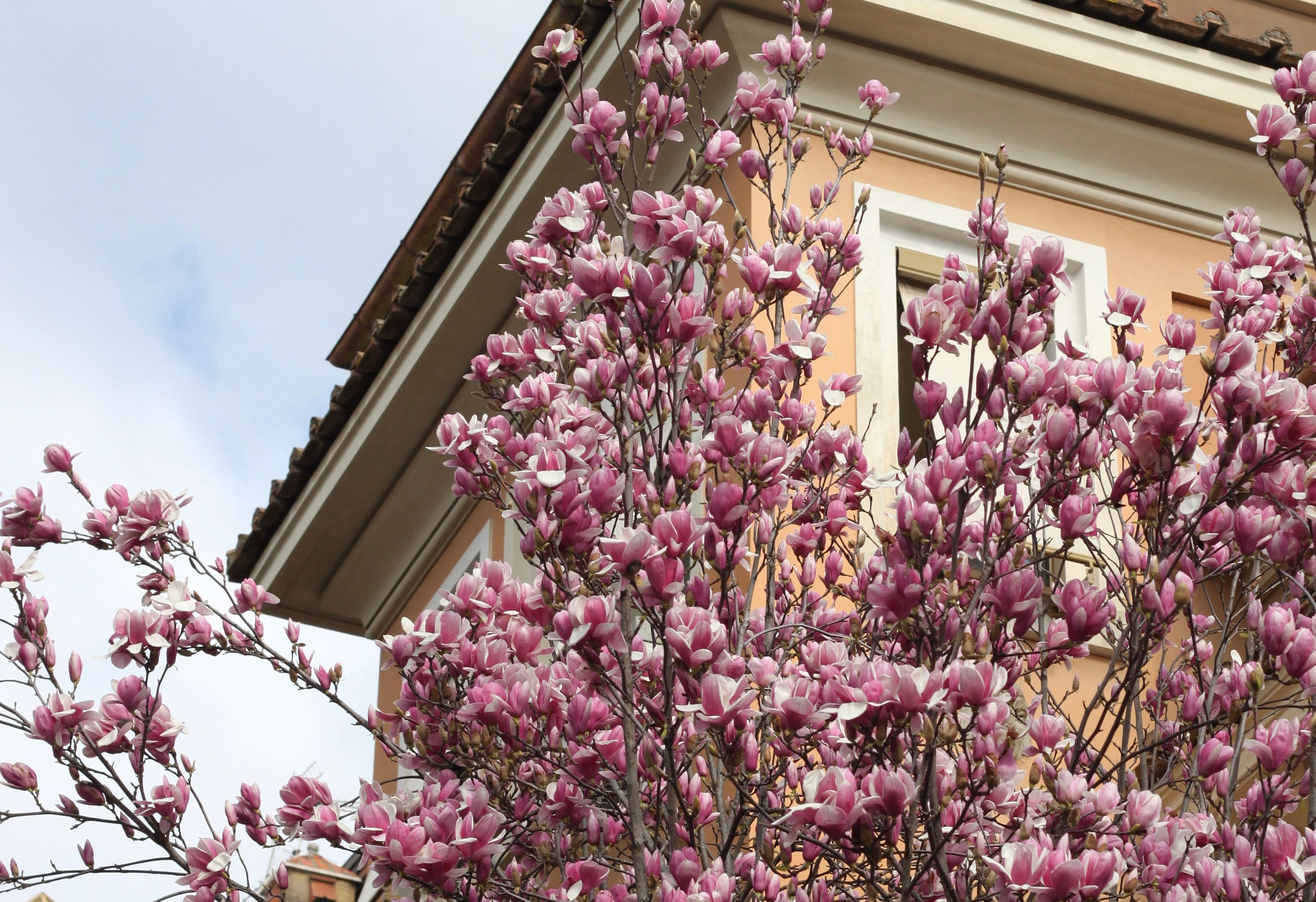
In the poem, Hopkins compares patience to ivy, in that it has the capacity to “[mask] our ruins of wrecked past purpose.” The ruins of our lives—vice, rash decisions, etc—are covered by deep-rooted patience. Hopkins doesn’t mean that patience acts merely as a superficial bandage, but rather something with the power to revive even what is dead, to mask our missteps with something more beautiful than our sins are ugly.
It is often harder to be patient than it is to “do the Lord’s work,” but it we are called to be imitators of Christ who, as Hopkins says, “is patient. Patience fills His crisp combs, and that comes those ways we know.”
Living Life to the Full (!!!)
February was my first full month in Europe and I have found a great number of adventures to go on in between the waiting and the impatience for all that lies ahead. The local grocery has seen me stop by countless times for picnic fodder to take to Pamphili Park or the rooftop terrace of a nearby convent. By trial and perseverance, I’ve found the cheapest, sweetest vino frizzante that splits pretty well three ways. A guy on the Linnea 64 bus tried to convert me, but I’m not really sure to what. I’ve started thinking in poetry again and I’ve tried to stop asking myself “Is this a big enough word?” every time I write them down. I visited a jazz bar with four of my best friends and had the classiest evening of cocktails, sushi, and music. The Palazzo Bonaparte offered an exhibition with artwork from Alphonse Mucha, one of my favorite artists of all time, and I spent a morning wandering through the gallery with wide open eyes. I thought I found my favorite church in Rome (Santa Maria in Trastevere) but then I visited another one (San Carlo alle Quattro Fontana), and still others. I have at least learned that I prefer Baroque over all else, particularly when it is a glorious blend of white, gold, and fresco.
It’s been a month of reflecting on death and dying to self, of beauty mixed with great sorrow, and the sacrament of the present moment.
A Lifelong Love Affair
When I was in high school I desperately wanted to do a study abroad program in Germany. I’ve always had a deep love for the language and a fascination for the culture. I ended up at a college with a program abroad—albeit in Rome, not Germany. However, I spent the last few days of February on a pilgrimage through Bavaria with a handful of classmates and acquaintances to visit sites pertaining to the life of Joseph Ratzinger, who later became Pope Benedict XVI.
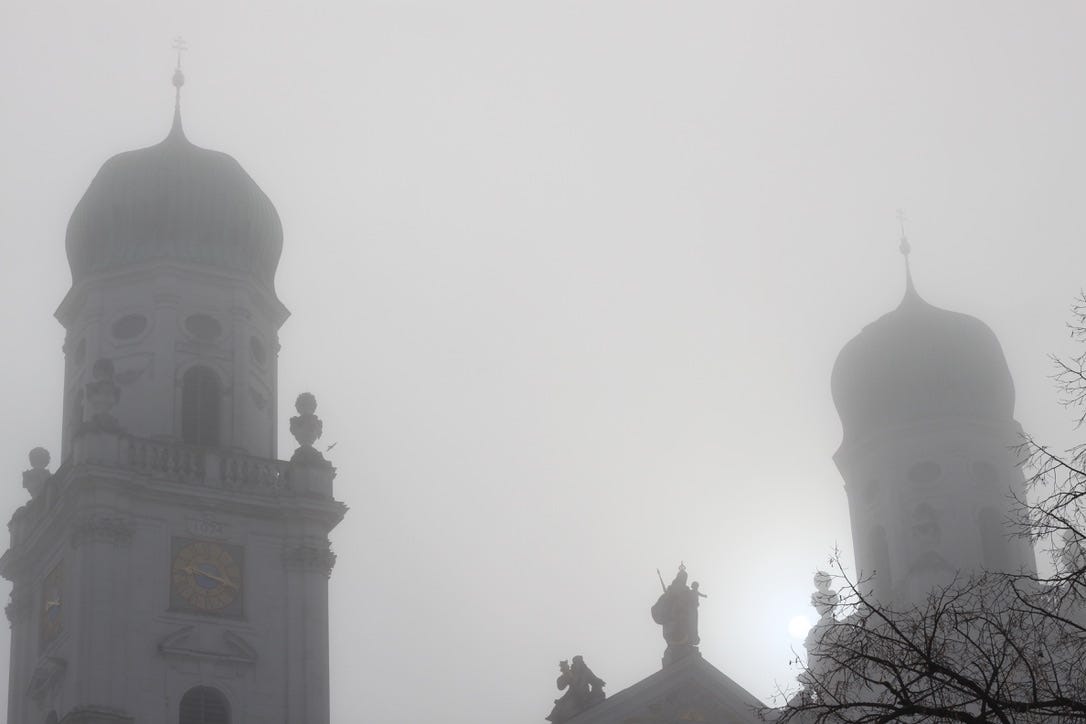
We stayed in Passau, Germany, which neighbored the cathedral of Sankt Stefan. Each morning we woke to the Angelus bells thundering through the river valley, a heavy mist shrouding the bell-tower and terrace. We were situated about a five minute walk from the Danube River and walked alongside it as often as we got the chance in the morning.
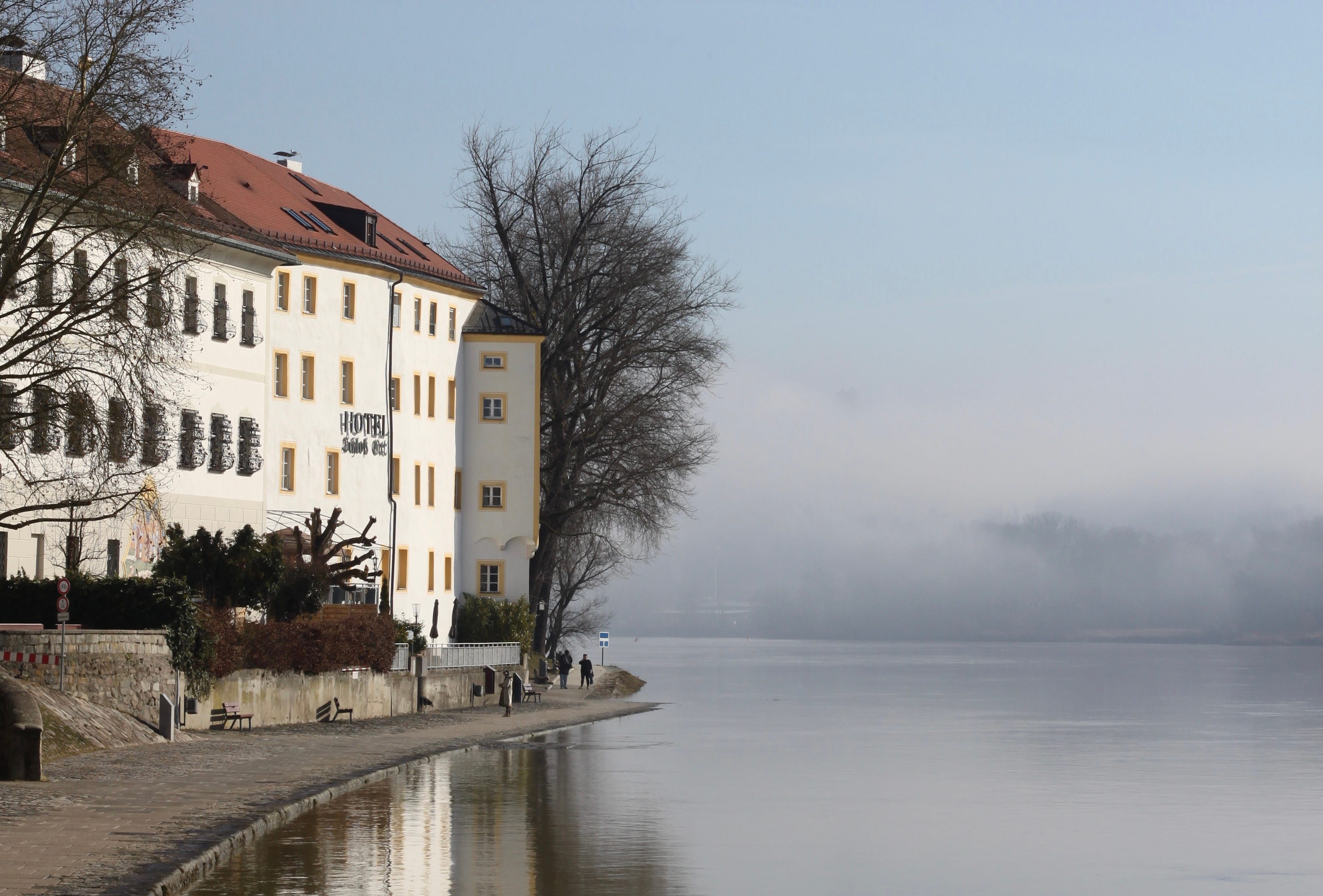
We met two of the bishops of Germany, a priest, and missionaries in the Bavarian region and had discussions of the condition of the Catholic Church in Germany. We sang Palestrina and shared meals together, wandered the streets of Passau, Regensburg, and Marktl seeing where Ratzinger was born and where he lived as a teacher, as well as receiving a private tour of the Ratzinger Foundation from the Bishop of Regensburg.
It was a weekend that took eleven pages to summarize in my journal. It felt like the actualization of a dream I’ve had for a long time; I revisited so much passion and interest from daydreams and research and the German classes I took in high school. There’s a part of me that wonders if I still can’t do that study abroad program in Germany, and a part of me that knows that I ended up where I’m supposed to be. Above all else, it was a weekend of good food, great landscape, and even better company—and it may be the catalyst of a (continued) lifelong love affair with Germany.
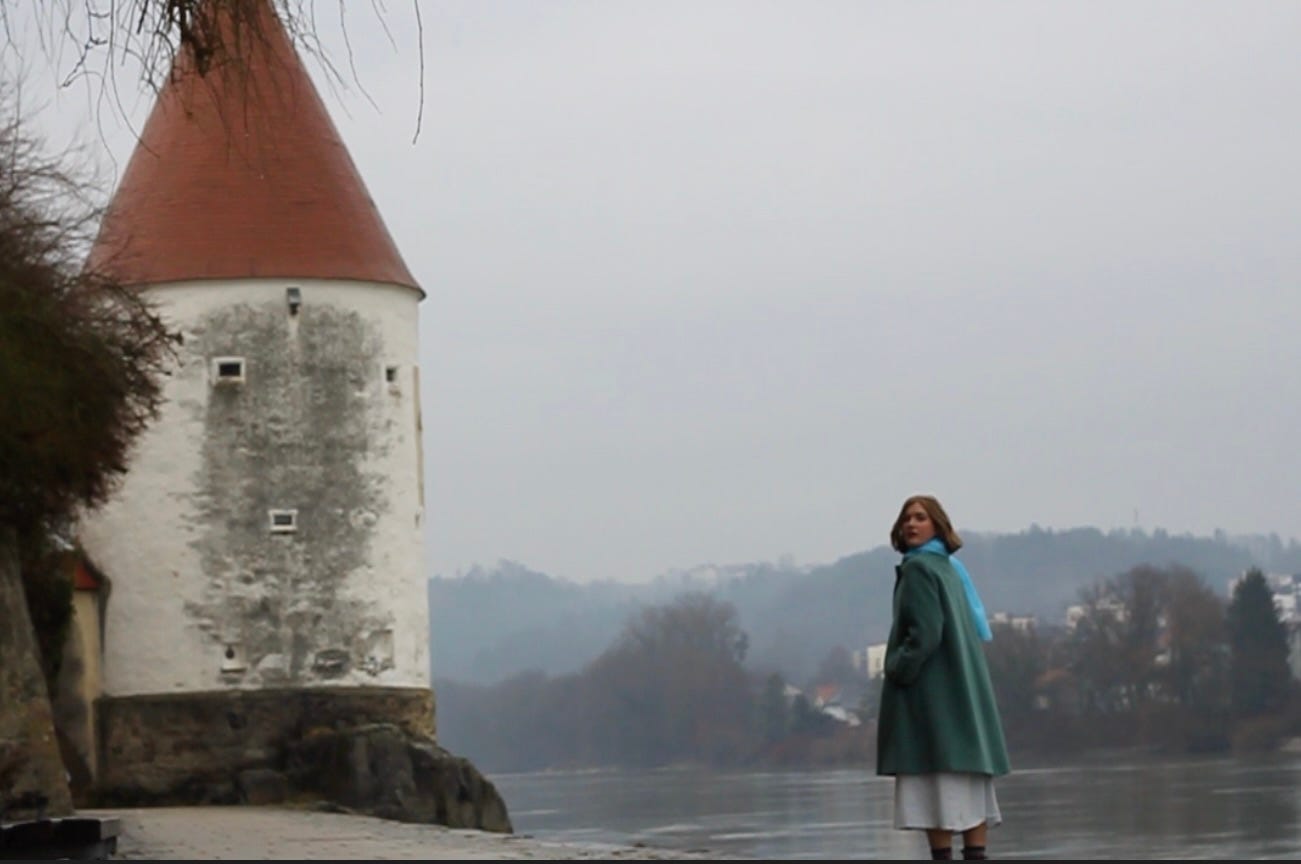
To all the journeys ahead!
+AMDG+
I love reading your heart! I'm so glad you're living your dreams, my love!!