April '26
artist archive 004

Passiontide (& the Goodbyes That Feel Like Death)
The beginning of April ushered in the holiest days of the year in the Liturgical calendar—the Easter Triduum. Holy Week in Rome was one of the most spiritually enriching experiences I’ve ever had. The streets themselves carried the smell of incense and locals would often offer a “Buona Pasqua!” at the crossing of paths.
My exams wrapped up Spy Wednesday and thus I took full advantage of my free schedule to attend as many of the traditional Passiontide liturgies as possible. I and several of my classmates decided upon Chiesa della Santissima Trinitas dei Pelligrini (the parish I attended most often while living in Rome) for our Holy Week.
It began with the Solemn Mass of the Last Supper on Holy Thursday, which concluded with the Eucharist being placed in the Altar of Repose. It is tradition in Rome that after the Mass of the Last Supper, the Eucharist is placed into a tabernacle at an altar decorated especially for the Triduum. Romans will then make pilgrimage from church to church, visiting the altars and offering up prayers.
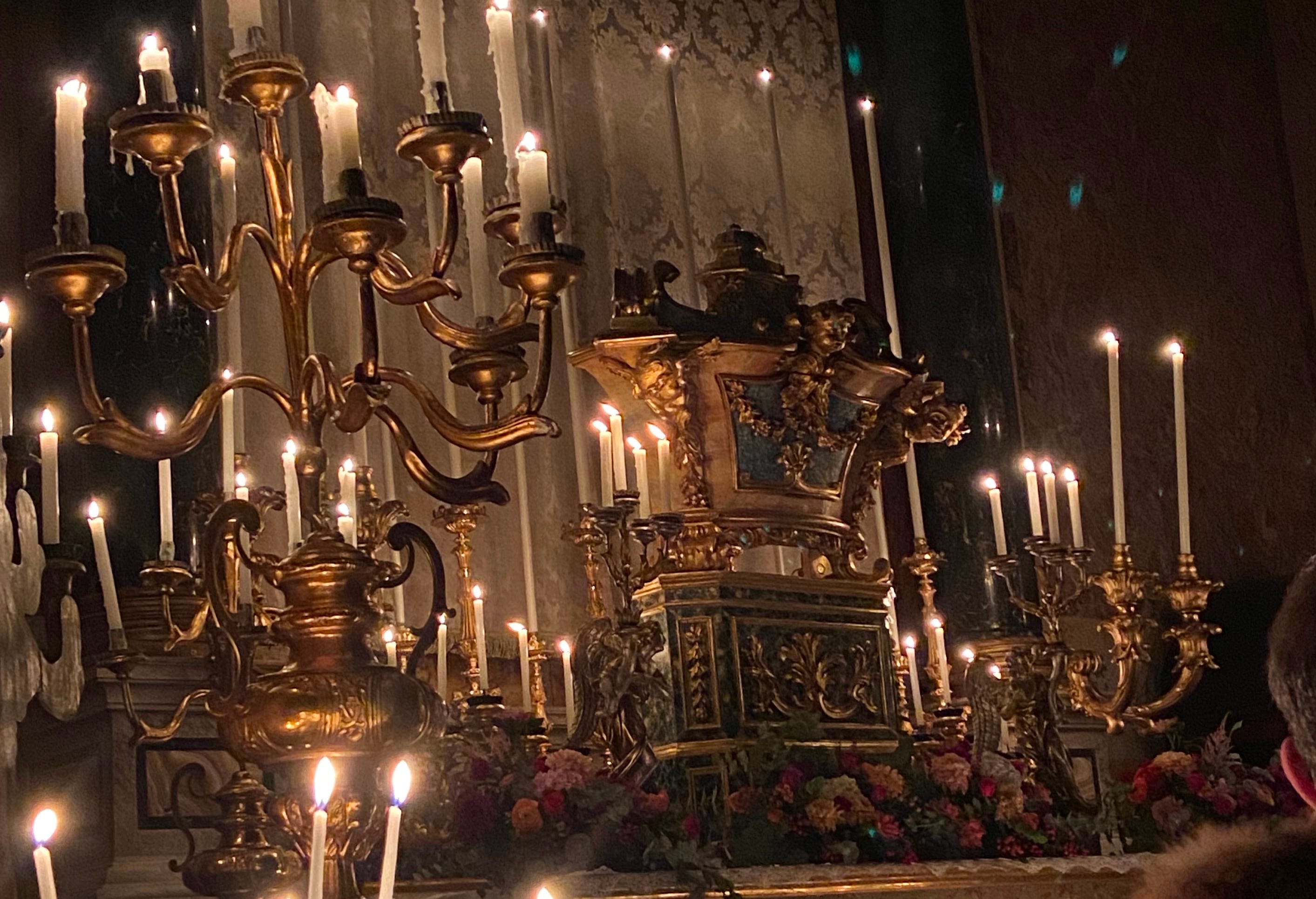
While my classmates left for their mini-pilgrimage, D & I stayed behind in Trinitas for the Office of Darkness, otherwise known as Tenebrae— a Catholic liturgy of sung Psalms and other Scriptural readings centered around Christ’s Passion and Death. The candles in a candelabra in the sanctuary are gradually extinguished until all are out and a loud noise echoes throughout the church, representing the chaos which followed Jesus’ death. The very conclusion of Tenebrae is the lighting of a single candle to show the light of Christ which conquers death.
On Good Friday I spent eight hours in Trinitas. D & I went to confession in the early afternoon, followed by the Stations of the Cross. After our Via Crucis, we took a brief break in the golden late afternoon to visit the Church of St. Bartholomew on Tiber Island. We returned to Trinitas for the Veneration of the Cross and Tenebrae afterwards.
Holy Saturday began quite unusually, as I got ready for the Easter Vigil at 7:30 in the morning. First thing, I met with a group of my girlfriends for my favorite breakfast Rome has to offer—un cappuccino e un cornetto alla crema. We talked and laughed and shared some of our sentimental musings on the near-conclusion of our semester abroad.
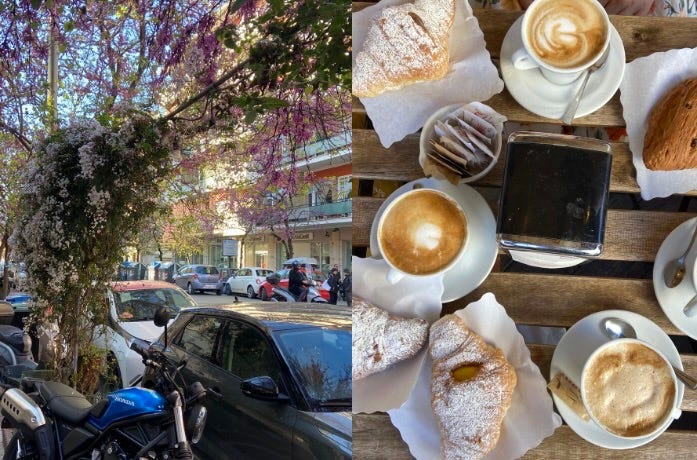
After this, I made the journey to the Fiumicino Airport to pick up my sister AE, who graciously made the journey to Italy to visit me and the Eternal City for Easter. I took my sister through Trastevere (she was on the noble but trying quest for an Italian leather jacket) before running back across the Ponte Sisto for the Easter Vigil at Trinitas.
I find it difficult to write about the Easter Vigil in a way that captures its glory (which ultimately is the glory of Christ’s Passion, Death, and Resurrection). It is something that does not make sense to the world and never will.
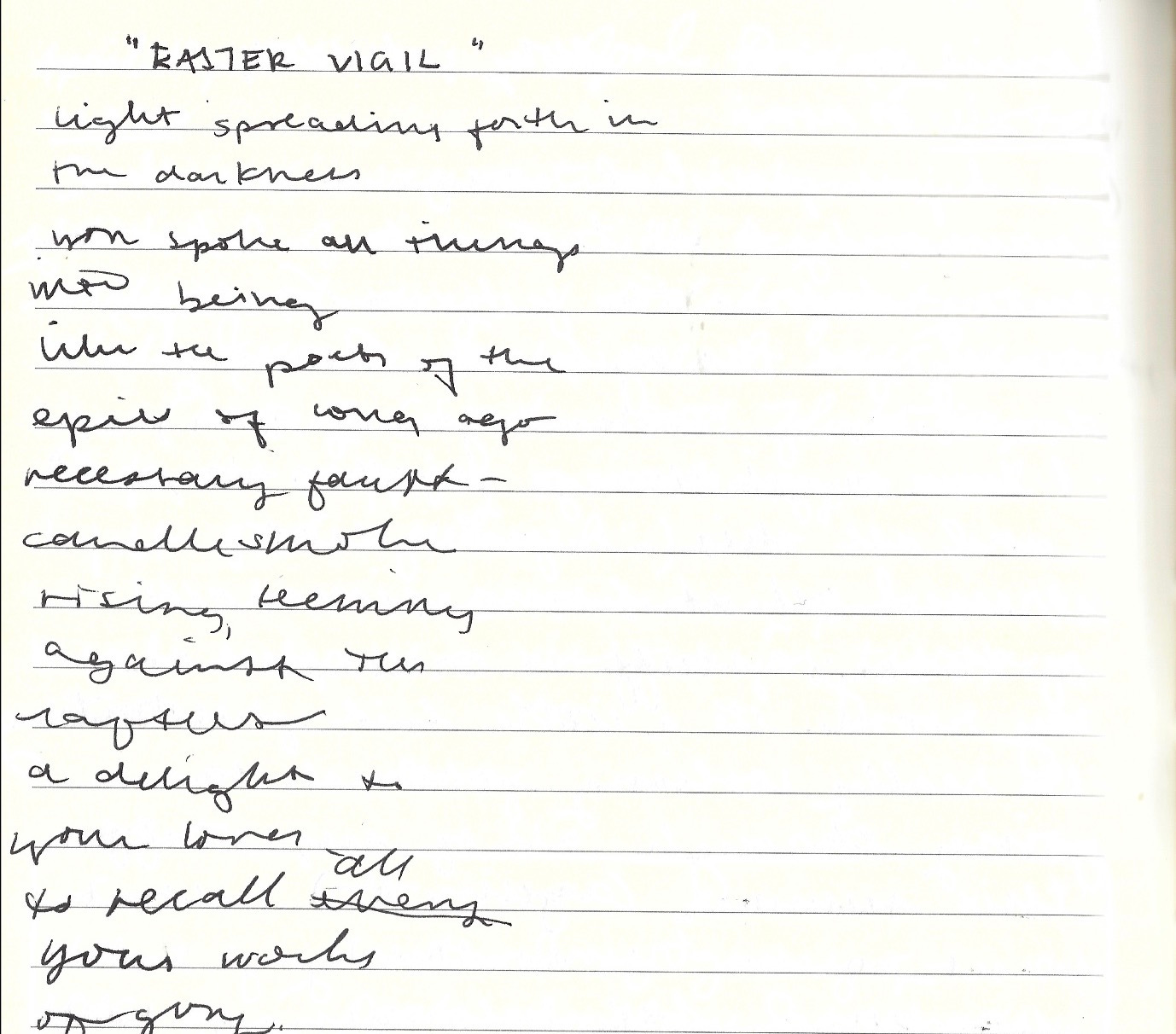
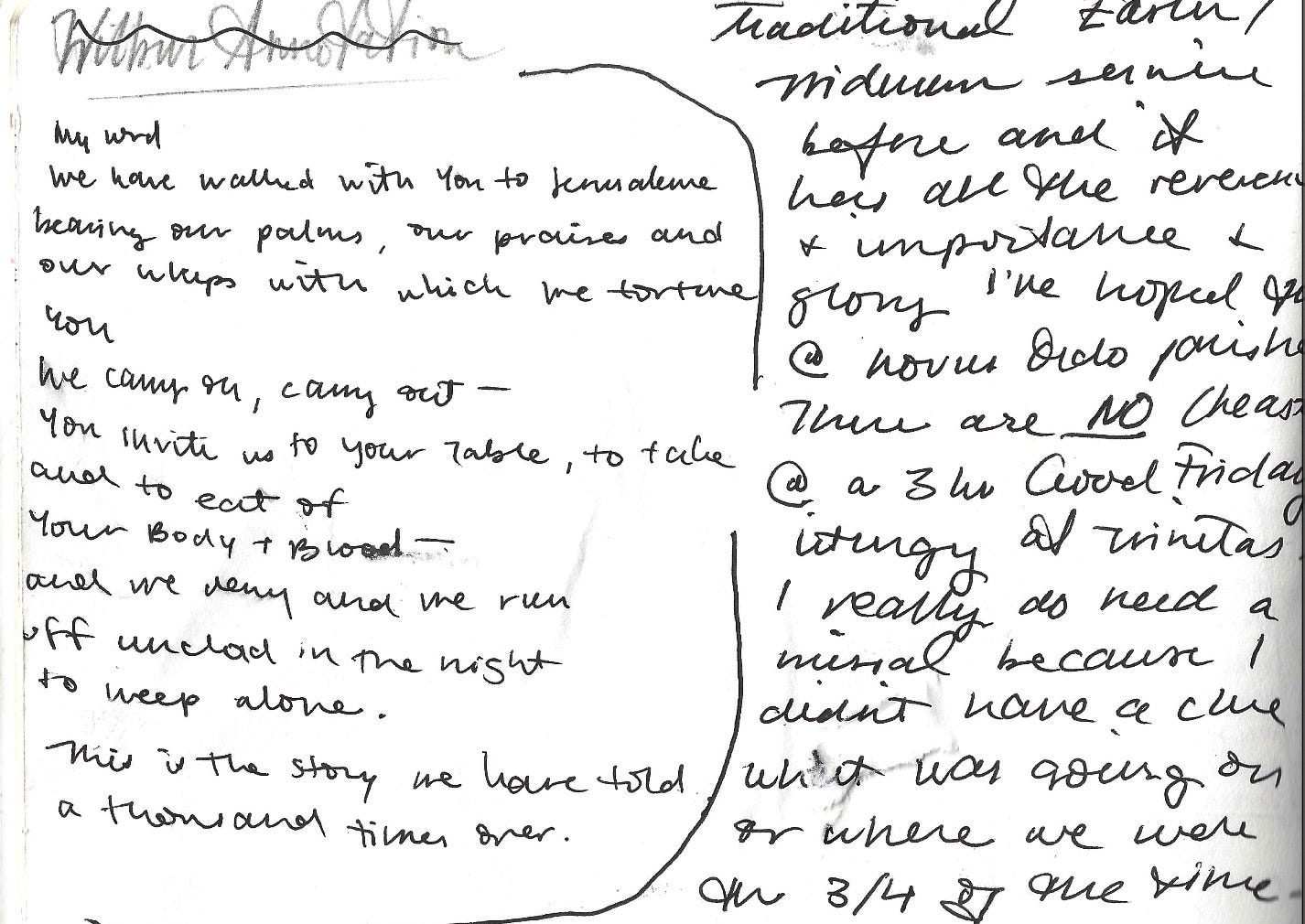
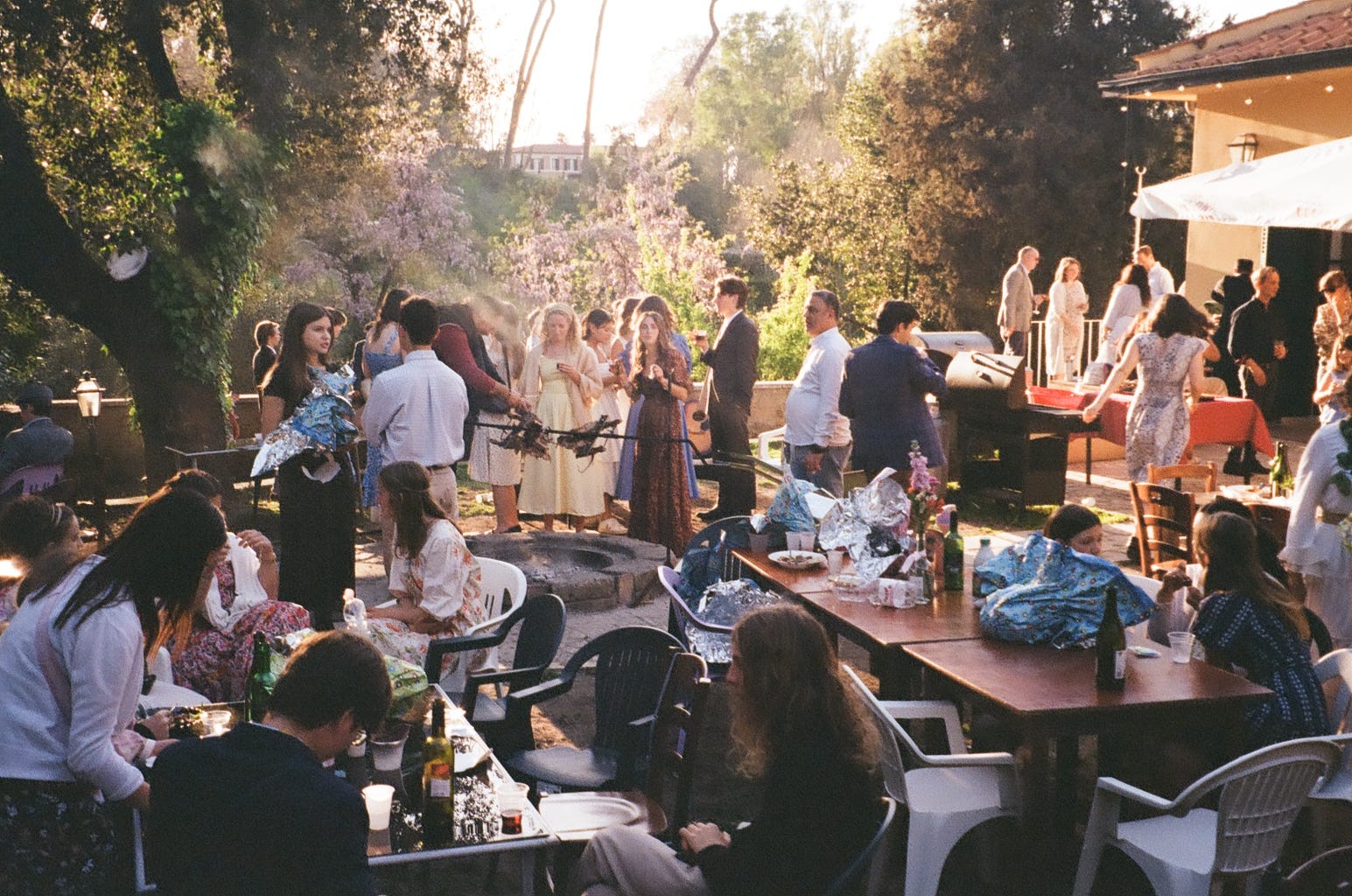
Following the conclusion of the Vigil around midnight, I followed a group of classmates into the heart of Trastevere. The night was alive with energy, from those flooding out of Vigil Masses and from others simply enjoying their Saturday night in Rome. We picked up pizza at one of the places near the Ponte Sisto and climbed the two mile hill back up to the Villa, giddy with the joy of Easter. We celebrated as true Catholic college students do—with a bonfire and a bottle of wine that began at midnight and never exactly ended. One by one, students dropped off. Some made it all the way back to their beds either at the Villa or the convent; others dozed off around the fire or on the couches underneath the balcony.
D & I were two of the only students who made it through the entire night. At nautical dawn we walked up to the terrace of Gianicolo Hill to watch the sun rise over the city. The mountains hung in the distance, the golden light triumphant over the line of the city. My climb up the Gianicolo was my first panoramic view of Rome, back in January, and the city had changed so much in my eyes in the months that had passed between. It was glorious, in the fullest sense of the word.
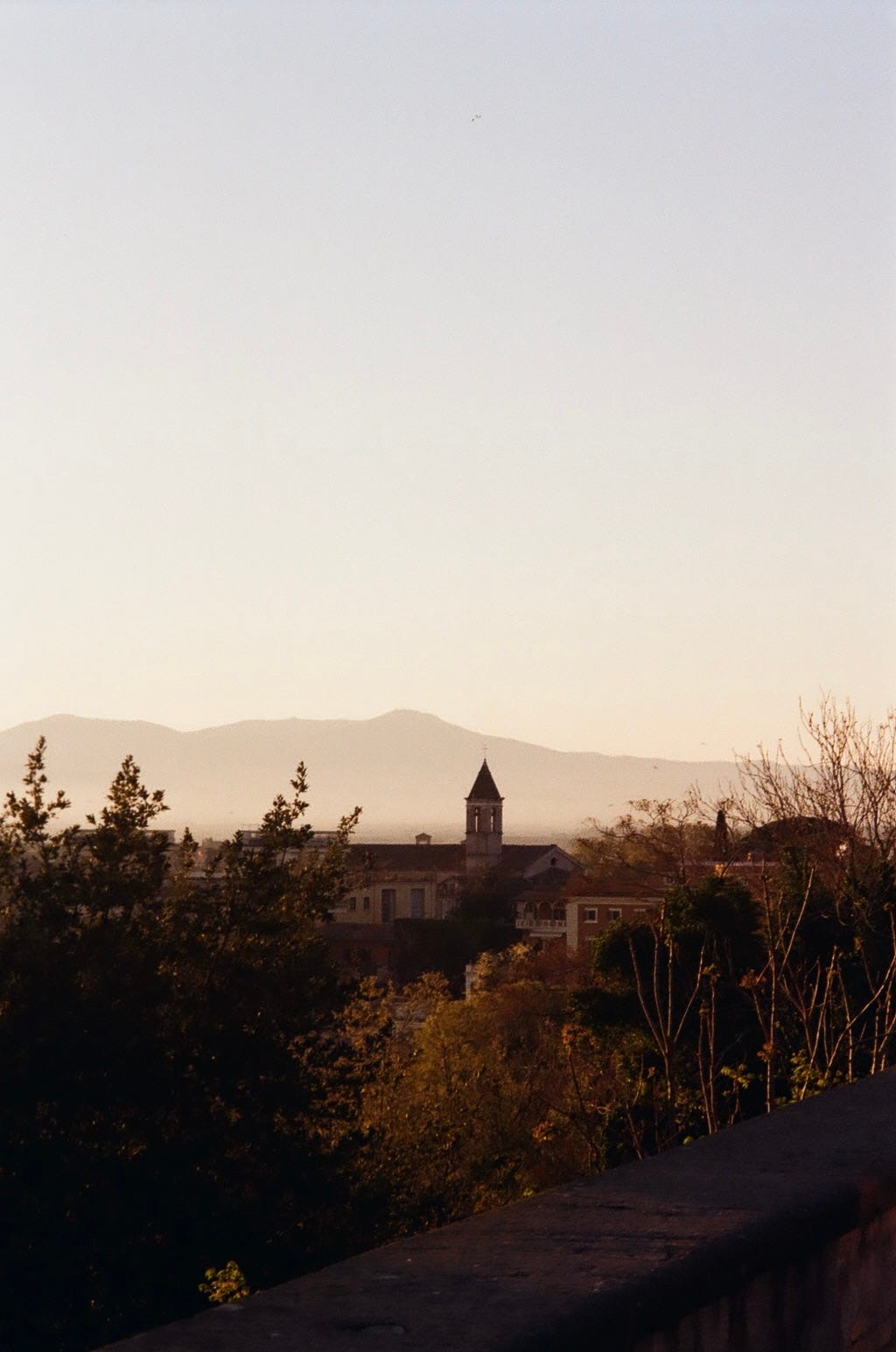
We followed sunrise with Easter morning Mass at Trinitas with my sister, after which we enjoyed Sicilian pastries from a nearby bakery. In the afternoon, I returned to Pamphili Park for my last picnic, this time with fresh strawberries and wine we picked up at a market in Monteverde, D, A, and AE in tow. We lounged in the sun and talked for a few hours before returning to the Villa for an Easter banquet too festive for words.
Soon after Easter it was time to leave Rome. My sister and I had planned a four day expedition to Wallhalben, Germany, to visit a family I used to nanny for in high school who had moved, and to conclude my semester in Europe. As the plane took off over the Eternal City, tears welled in my eyes at the memory of every moment I spent the past semester: my haunting of Pamphili Park, poetics classes down the road from St. Peters, studies of Latin ghost stories with a fiery Irish priest at the Domus Australia, long sunshiny days on the Mediterranean coast, cappuccinos, waiting for the bus in the pouring rain in a raincoat that was not waterproof, busking with my classmates in front of T’ever, our favorite bar in Trastevere.
Dr. Connell had told us during one of class periods of a phrase that the French have, “Partir, c’est mourir un peu,”1 which means something along the lines of “to part is to die a little.” The phrase resounds through my mind when I recall the days I spent abroad—there is a death and a grief in goodbyes, whether they be the temporary goodbye exchanged to friends or lover at the end of a semester, or the forever goodbye that is the conclusion of a semester abroad. I will never be nineteen in Rome with my sophomore class ever again, and that is a goodbye that feels like a little death.
On Home and Old Haunts
Life, of course, went on after Rome. I bit the bullet on a purchase I’d been considering for a few years and welcomed a starter espresso machine onto my countertop. Having a morning cappuccino or a post-dinner shot of espresso has helped somewhat to combat the inevitable romesickness. It’s also been quite fitting for my belief that there really ought to be no such thing as a quick cup of coffee.
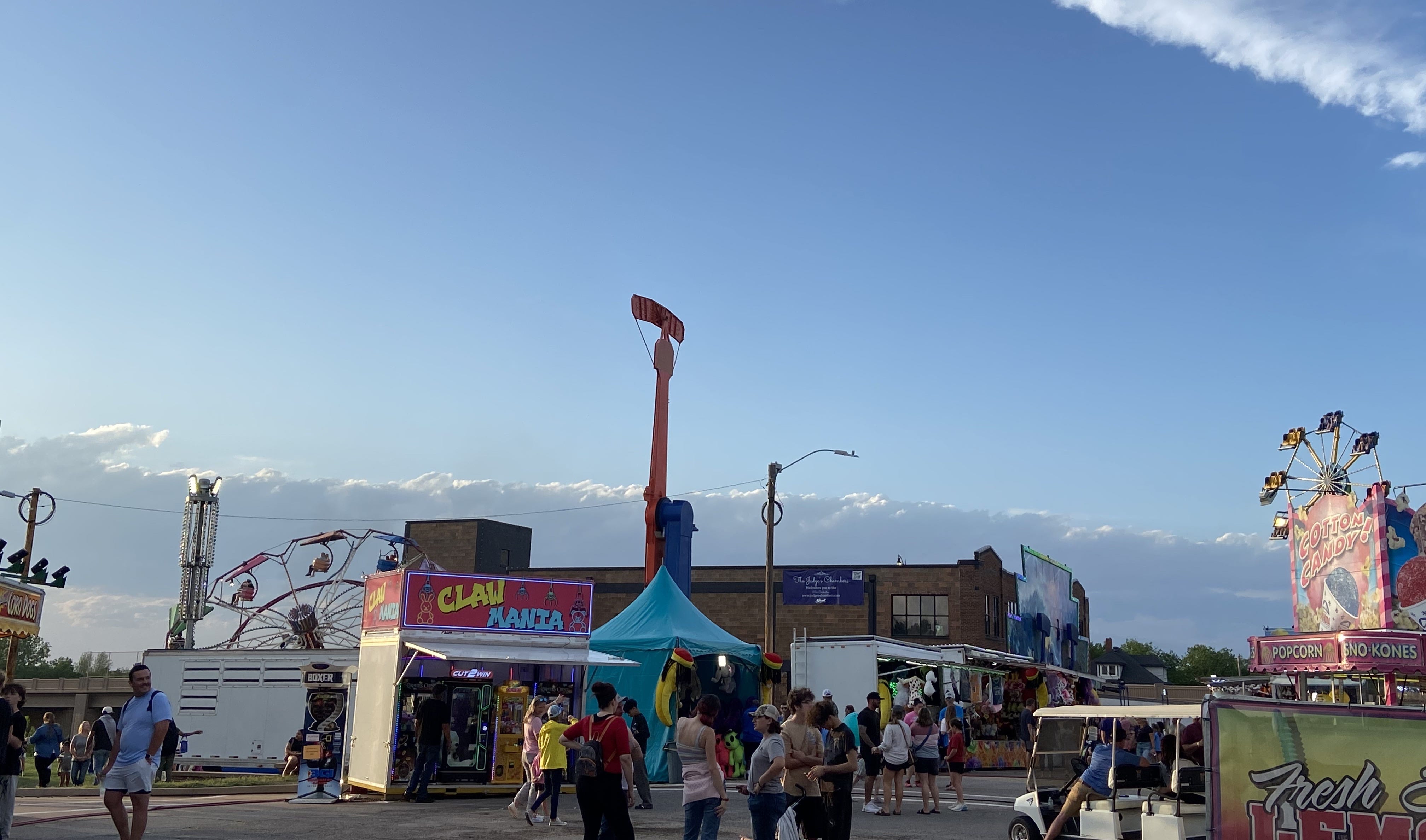
I was home in time for the annual carnival which comes to my hometown celebrating the 1889 Oklahoma Land Run. My younger siblings and my dad and I went down on the first night it was open. My dad and I talked a fair bit about Traditionalism until my younger brother, W, finally convinced me to get on one of the rides, appropriately named “The Screamer.” The Screamer is a giant green contraption in the shape of an upside-down Hammer of Thor. It swings like a pendulum, a lot like the pirate boat rides often found at amusement parks, except the pendulum swings all the way upside down, dangling riders headfirst at least 80 feet in the air. Believe it or not, “The Screamer” is a fitting name. When the seemingly everlasting (two) minutes were over and the hammer finally hissed to a stop, my fingers were curled so tightly around the shoulder harness' handles that I couldn’t straighten them out.
On top of espresso and carnival rides, I jumped back into my former dance studio’s Level 7 class. It was both wonderful and frustrating to start dancing again. Wonderful in that there is no kind of tired I love more than the tired of dancing, but frustrating that while two years out of regular practice for ballet is not enough to atrophy muscle memory, it is enough to atrophy all the minuscule turn-out and extension muscles themselves. Those muscles are crucial for a dancer’s fine-tuned line and form, not to mention the smooth and quick transitions between movements.
I came home from each class happily tired and once again doing ronde jambes with a hand on the kitchen counter or practicing jump and beat combinations in my room at midnight just like when I was in high school, but also frustrated at the skill I had lost. In true stubborn & perfectionist fashion, all there was to do was continue showing up to afternoon classes and learn how to settle back into old spaces with grace.
until next time—
cms
+AMDG+
There’s a wonderful French poem which uses this line in conduplicatio. For poetry lovers, here’s a translation → https://www.lieder.net/lieder/get_text.html?TextId=49269
(I don’t know French, so I’m not sure how accurate it is!)
Lovely. Your words brought back memories I had forgotten about what it is to be in the middle. The lasts and the firsts.
Finally found your substack. Look forward to ready more of your excellent writing!